

7 Ways to Reduce Hot Tub Maintenance
Last Updated: October 30, 2026
Quick Summary
To reduce hot tub maintenance, follow a realistic schedule of a two-minute daily check, a 25-minute weekly session and a 45-60 minute monthly clean, rather than expecting ten minutes a week. Cleaning the filter properly and shocking the water weekly prevent most problems, and better daily habits stop maintenance becoming recovery from neglect.
- Plan for around 20 hours of daily and weekly tasks a year, plus quarterly deep cleans.
- Rinse filter cartridges gently with a hose and rotate two so one soaks while the other runs.
- Keep pH between 7.2 and 7.6 and alkalinity between 80 and 120 ppm.
- Shock weekly in the evening with the cover off for at least 30 minutes.
- For spas used once a fortnight, run pumps 15 minutes twice a week and shock fortnightly.
Table of Contents
- 1. Start With a Realistic Hot Tub Maintenance Schedule
- 2. Learn How to Clean a Hot Tub Filter Properly
- 3. How to Keep Hot Tub Water Clean for Longer
- 4. Hot Tub Maintenance for Rarely Used Hot Tubs
- 5. Prevent Maintenance With Better Daily Habits
- 6. Troubleshooting by Symptom: Cloudy Water, Foam and Scale
- 7. What a Service Plan Costs and What It Saves You
- Book a Private Consultation to Plan Your Spa Care
- Frequently Asked Questions
1. Start With a Realistic Hot Tub Maintenance Schedule
Most hot tub owners quit their routine because they were sold a fantasy. Ten minutes a week, they were told. In reality, a properly kept spa asks for a short daily check, a focused weekly session and a deeper clean each month. Knowing that up front is the first real step in learning how to reduce hot tub maintenance.
The trick is to plan for the realistic figure, not the fantasy one. Owners who expect 25 minutes a week stick with the routine far longer than those who were promised 10.
Here is a prioritised routine with honest time estimates. Do the tasks in this order, because the earlier ones prevent the later ones from becoming urgent.
Daily (2 minutes)
- Lift the cover and glance at the water. If it is clear, close it. If it is cloudy or foamy, test before dosing.
- Check the water level is above the skimmer line.
That is it. Two minutes a day prevents most of the problems that turn into an hour of correction later.
Weekly (25 minutes)
- Test water and adjust chemicals: 10 minutes
- Skim debris and wipe the waterline: 5 minutes
- Check the filter and rinse if needed: 5 minutes
- Shock the water: 5 minutes
Do the weekly session in one go, ideally in the evening so the shock can work overnight with the cover off for at least 30 minutes.
Monthly (45-60 minutes)
- Deep-clean the filter cartridge with a soaking solution rather than a quick rinse.
- Wipe down the shell and waterline with a surface cleaner.
- Check the cover for wear and clean it with a suitable cover cleaner.
- Test calcium hardness and total dissolved solids; if either is out of range, plan a partial or full water change.
Quarterly (2-3 hours)
- Drain, clean and refill the tub, or arrange for it to be done.
- Flush the plumbing lines before draining to clear biofilm.
- Inspect the pump, heater and seals for early signs of wear.
Spread over a year, the daily and weekly tasks add up to around 20 hours, plus the quarterly deep clean. That figure surprises people, and it is why so many spas sit idle with cloudy water.
If that routine does not appeal, you can look at the service plans we offer for owners who would rather someone else handle the weekly work. You can browse the servicing and maintenance options we offer for owners who would rather someone else handle the weekly work.
The point of the schedule is not to add work. It is to show you where the work actually is, so you can decide which parts to do yourself and which parts to hand over.
2. Learn How to Clean a Hot Tub Filter Properly
A clean filter is the single biggest lever you have over water quality. A clogged cartridge forces the pump to work harder, cuts water circulation and gives bacteria a place to settle. Cleaning it properly takes ten minutes and saves you hours of chemical correction later.
Here is the routine:
- Switch off the spa at the isolator before touching anything.
- Lift out the cartridge and rinse it with a garden hose, working top to bottom between the pleats.
- Soak it in a filter cleaning solution for the time stated on the bottle.
- Rinse again until the water runs clear.
- Let it dry fully before refitting.
A common mistake is blasting the pleats with a high-pressure jet. That tears the fabric and lets debris through. Use a gentle flow instead.
Rotate two cartridges. While one soaks, the other runs. Replace cartridges when the pleats stay matted after cleaning, typically every 12 to 18 months for regular use.
3. How to Keep Hot Tub Water Clean for Longer
Clean water is mostly about consistency, not effort. Small, frequent adjustments beat big corrective doses every time. Two habits do most of the work: regular testing and a proper shock schedule. But the sanitiser system you choose also shapes how much maintenance you sign up for, and most guides gloss over that.
Water Testing and Chemical Levels Without the Fuss
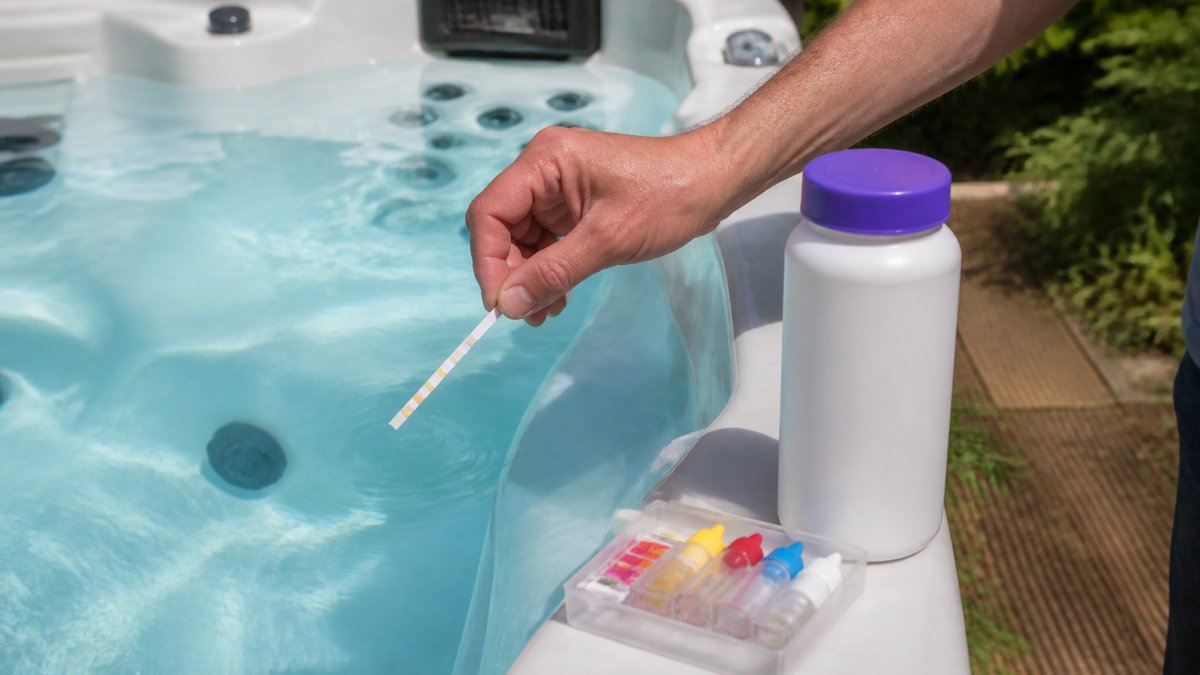
Test the water two or three times a week with strips, and once a week with a liquid kit for accuracy. You are watching four numbers: pH, total alkalinity, sanitiser level and calcium hardness. Keep pH in the 7.2 to 7.6 range and alkalinity between 80 and 120 ppm. Get alkalinity right first, because pH will not settle until it is.
The Pool Water Treatment Advisory Group's guidance on spa water is a useful reference for safe chemical levels. Dose in small amounts, run the jets for 15 minutes, then retest. Never mix chemicals together, and always add chemicals to water, not water to chemicals.
Shock Treatment and Water Clarity
Shock once a week with a chlorine or non-chlorine oxidiser. This burns off chloramines, the compounds that cause that stale smell and dull water. Shock in the evening with the cover off, and leave the cover open for at least 30 minutes so gases can escape.
If you use bromine, shock with a compatible oxidiser and expect slightly slower results. Either way, a weekly shock is what keeps water clear between changes.
Chlorine, Bromine and Saltwater: What Each Means for Maintenance
No system eliminates testing or upkeep, but they differ in how much hands-on work they ask for. Here is an honest comparison of the maintenance implications.
Chlorine is the most common choice. It is cheap, fast-acting and easy to dose.
Essential Hot Tub Service Plan →
Bromine is more stable at higher temperatures and works over a wider pH range, which makes it more forgiving if your testing slips. It is gentler on skin and eyes for some users.
Saltwater systems generate chlorine from salt in the water, so you dose less often.
A common pattern is that owners who choose a system expecting zero maintenance end up disappointed.
4. Hot Tub Maintenance for Rarely Used Hot Tubs
A hot tub you barely use still needs care. In some ways it needs more, because still water sits and stagnates. The sanitiser drops, biofilm forms in the pipework and the water turns before you notice.
For a spa used once a fortnight or less, run the pumps for 15 minutes twice a week to keep water moving through the pipework. Test and dose weekly even if nobody has been in. Shock fortnightly.
If you plan to leave the spa unused for a month or more, winterising is usually the better call.
5. Prevent Maintenance With Better Daily Habits
The cheapest maintenance is the maintenance you never have to do. A few habits stop problems before they start:
- Shower before every soak to cut oils, lotions and soap entering the water.
- Keep the cover on whenever the spa is not in use.
- Rinse swimwear, and skip fabric conditioner, which clogs filters.
- Skim leaves and debris within a day of them landing.
- Keep the water level above the skimmer line so circulation stays steady.
What most guides miss is how much of "maintenance" is really recovery from neglect.
6. Troubleshooting by Symptom: Cloudy Water, Foam and Scale
When something goes wrong, work backwards from the symptom. Most issues trace to one of three causes.
| Symptom | Likely Cause | Fix |
|---|---|---|
| Cloudy water | Low sanitiser or clogged filter | Shock, clean filter, retest |
| Foam | Soap residue or high organics | Rinse filters, use defoamer, shock |
| Scale on shell | High calcium hardness or pH | Lower pH, use scale remover, partial refill |
| Stale smell | Chloramines | Shock and leave cover open |
| Waterline scum | Oils and lotions | Wipe weekly with a surface cleaner |
Watch out: adding defoamer without fixing the underlying soap or organic load only hides the problem for a few days.
7. What a Service Plan Costs and What It Saves You
A service plan trades a fixed monthly fee for someone else doing the work. Whether that is worth it depends on how much your time is worth and how often you use the spa.
Our plans start at £39 a month for the Essential plan, which includes one full service a year, filter replacement, chemical balancing and a 25% discount on call-outs. The Advanced plan at £99 a month adds six-monthly servicing and bi-monthly visits.
Compare that with the cost of getting it wrong. A neglected spa means premature filter replacement, scale damage and, eventually, a repair bill far larger than a year of servicing. You can see the full service plan tiers and what each includes to weigh it up.

Book a Private Consultation to Plan Your Spa Care
Getting the routine right from day one is what separates a spa you love from one you resent. At Medi-Spa, we offer expert consultation to help owners plan their care. Our team offers expert consultation, professional installation and long-term support after the sale, backed by a lifetime guarantee.
If you would rather hand the work over, our one-off hot tub service restores the spa to showroom condition in a single visit.

Get started with Medi-Spa and enjoy a spa that stays clear, warm and ready without the weekly slog.
Frequently Asked Questions
How often should I clean my hot tub filter?
Rinse the filter every one to two weeks if you use the spa regularly, and give it a deeper soak in a filter cleaner every four to six weeks. A second filter cartridge lets you swap one in while the other soaks, so the spa is never out of action. Replace the cartridge roughly every 12 to 18 months, or sooner if the pleats stay matted after cleaning. Clean filters keep water circulating properly, which is the single biggest lever for reducing hot tub maintenance overall.
Does a hot tub cover reduce maintenance?
Yes. A fitted cover keeps debris, rain and leaves out of the water, which means less skimming, fewer contaminants and less strain on the filter. It also holds heat in, so the heater runs less and chemical levels stay more stable between tests. Clean the underside of the cover monthly with a diluted surface cleaner and check that it seals properly. A cover that has gone heavy or warped lets water and dirt through, so replace it rather than persisting with a poor fit.
How do I keep hot tub water clean for longer?
Test and balance the water twice a week, keep sanitiser within the recommended range, and shock treat weekly to clear chloramines. Rinse the filter regularly and clean the waterline before it builds up. Shower before you get in, and avoid lotions, oils and swimwear washed in detergent. If you want to reduce hot tub maintenance further, a service plan that includes chemical balancing and filter replacement takes the guesswork out of the routine.
What is the best way to clean out my hot tub?
Use a line cleaner in the plumbing before you drain, run the jets for around 15 minutes, then drain and refill. Clean the shell and waterline with a surface cleaner, deep clean or replace the filter, and rebalance the water once the tub is full and heated. A full drain, deep clean and refill takes about three hours professionally. Doing this every three to four months, or twice a year for lighter use, prevents the biofilm and scale that make weekly maintenance harder.
