

Is a Home Sauna Overkill for Beginners? Honest Guide
Table of Contents
- Is a Home Sauna Overkill for Beginners? The Honest Answer
- Are Home Saunas Worth It for a Beginner?
- Sauna Temperature for Beginners: What Feels Right
- Sauna for Beginners: How Long Should a Session Last?
- Home Sauna Running Costs: What You'll Actually Pay
- Choosing a Beginner-Friendly Home Sauna
- Conclusion
- Frequently Asked Questions
Last Updated: 16 October 2026
Is a Home Sauna Overkill for Beginners? The Honest Answer
No, is a home sauna overkill for beginners? It is not. The real question is whether you want one, not whether you have earned one. A home sauna is a heated cabin built into your home that uses dry heat to help you relax and recover. At Medi-Spa, we install them for people who simply want to unwind after work, not just for athletes.
Most buyers we speak to are not training for anything. They want a quiet corner of the house where the day stops. That is a perfectly good reason to buy one. Below, we break down what a beginner actually needs to know before spending money.
Are Home Saunas Worth It for a Beginner?
A home sauna is worth it if you will use it often. Value comes from regular use, not from the price tag. Someone who sits in it three or four times a week gets far more from it than someone who uses it twice a year.
Think about how you will use it:
- Daily wind-down after work
- Muscle relief after gym sessions
- A warm place to read or listen to music
- A shared ritual with a partner
If two or more of those sound like you, the maths works in your favour. If none do, save your money.
Sauna Temperature for Beginners: What Feels Right
For beginners, the right sauna temperature is one you can sit in without feeling panicked. That usually means starting lower than you think you need.
Infrared cabins run at around 45-55°C. That may sound low next to a traditional Finnish sauna at 70-100°C, but infrared warms your body directly rather than heating the air around you. The heat feels deeper and gentler at the same time. This penetrating warmth encourages a physiological response known as infrared sauna detoxification, which helps the body process accumulated impurities more efficiently than higher air temperatures alone.
Traditional cabins are a different experience. Short, intense, and built around the steam ritual. Neither is better. They simply suit different people.
| Sauna Type | Typical Temperature | Session Feel | Best For |
|---|---|---|---|
| Infrared | 45-55°C | Gentle, steady warmth | Daily use, beginners |
| Traditional Finnish | 70-100°C | Short, intense heat | Those who want the classic ritual |
Start at the lower end. Move up only when the session feels too easy.
Sauna for Beginners: How Long Should a Session Last?
A beginner session should last 15 to 20 minutes. You can build up to 30 or 45 minutes over time, but there is no prize for pushing through discomfort.
Watch for these signs that it is time to stop:
- Dizziness or light-headedness
- Feeling unusually tired
- A racing pulse that does not settle
- Nausea
Come out, cool down, and drink water. You can always go back in.
Home Sauna Running Costs: What You'll Actually Pay
Home sauna running costs are lower than most people expect, especially with infrared. An infrared cabin warms up in 10 to 15 minutes and draws far less power than a traditional heater.
Running costs depend on four things:
IR2910 Infrared Sauna | Compact 1-2 Person, Lifetime Guarantee →
- The type of heater
- How long each session lasts
- How often you use it
- Your electricity rate
Traditional cabins take longer to heat and use a more demanding heater, so they cost more per session. Infrared cabins reach temperature quickly and hold it well, which keeps each use modest.
The purchase price is the bigger number. Our entry model, the IR2910 Infrared Sauna, starts at £2,350. A traditional two-person cabin such as the BS2000CBT sits at £7,499.


Choosing a Beginner-Friendly Home Sauna
The best beginner sauna is the smallest one that fits your space and your habits. Buying more cabin than you need is the most common mistake we see.
Ask yourself three questions:
- How many people will use it at once?
- Where will it live, indoors or outside?
- Do you want gentle infrared heat or the traditional steam ritual?
For solo daily use in a spare room or home gym, the IR1100 Infrared Sauna is our pick. It is a one-person Red Cedar cabin at 100 x 100 cm, with three heating zones and a lifetime structural guarantee. At £2,999, it is the smallest format we carry.

If you want the classic experience in the garden, the BS2000 Outdoor Barrel Sauna is a two-person Red Cedar barrel with a porch, priced at £5,499.
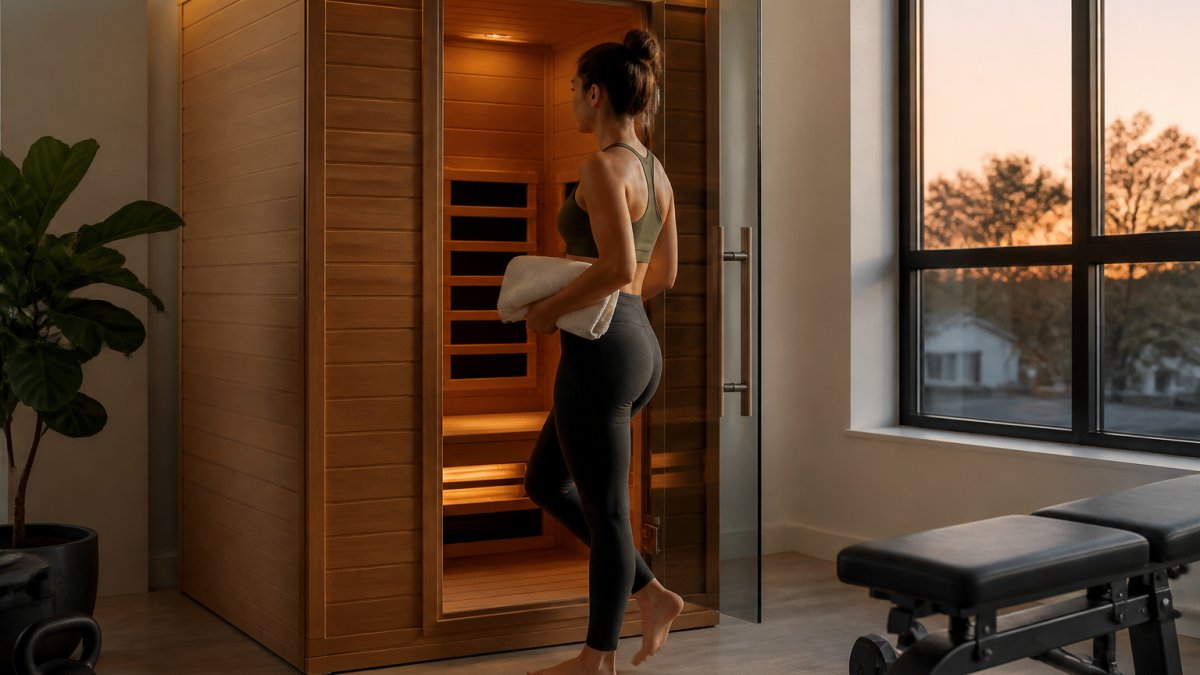
Every model we sell is delivered and installed by our own team, and each carries a lifetime structural guarantee.
Conclusion
The hardest part of buying a home sauna is deciding you are allowed to. You do not need to be an athlete, and you do not need a training plan. You need a corner of the house and a habit you will keep.
Medi-Spa builds infrared and traditional saunas for exactly that. Every cabin comes with a lifetime structural guarantee, professional installation by our own team, and a design consultation to match the cabin to your space. Book a private consultation and we will help you choose the right one.
Frequently Asked Questions
Is a home sauna worth it for a beginner?
For most beginners, yes, provided you buy for the way you'll actually use it. A compact infrared cabin like the IR2910 at £2,350 gives you daily sessions without needing a large room or a big outlay. If you want the traditional hot-stone experience, the BS2000CBT at £7,499 delivers it. What makes a home sauna worth it is frequency: a sauna you use four or five times a week earns its place far more than one used twice a month.
How long should a beginner stay in a sauna?
Start with 10 to 15 minutes and build up gradually. In an infrared cabin running at 45-55°C, most people comfortably reach 30 to 45 minutes within a few weeks. Traditional saunas run hotter, so shorter sessions of 10 to 20 minutes suit beginners better. Come out if you feel lightheaded, and drink water before and after. There is no prize for enduring a longer session than feels comfortable.
What temperature should a beginner sauna be?
Infrared cabins typically run at 45-55°C, and some models reach 55-60°C. That sounds low compared with a traditional Finnish sauna at 70-100°C, but infrared warms your body directly rather than the air around you, so the experience feels warmer than the number suggests. Beginners generally find infrared temperatures easier to sit through for longer periods. Start at the lower end and adjust once you know how your body responds.
How much does it cost to run a home sauna?
Running costs depend on the heater's power rating, your session length and your electricity tariff. A compact infrared cabin draws considerably less than a traditional 6kW heater, and infrared models warm up in 10 to 15 minutes rather than 30 or more. Shorter warm-up times and lower session temperatures keep usage modest. Check your current unit rate and multiply it by the heater's kW rating and your weekly session hours for a realistic figure.